

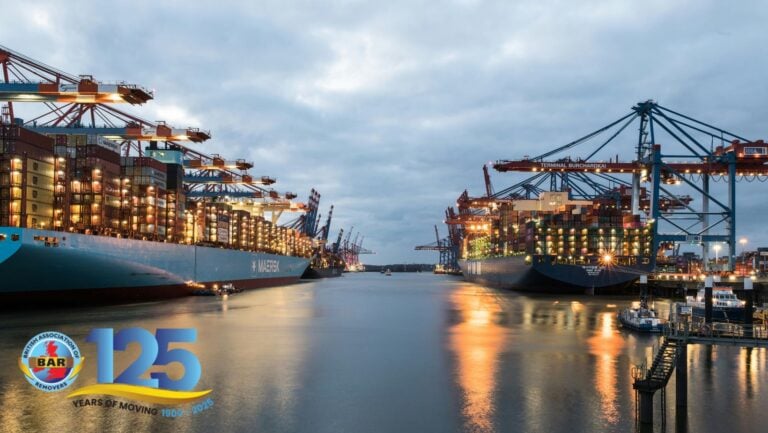
As we head into 2026, global shipping conditions remain challenging, and the latest industry guidance confirms that many of the pressures seen throughout 2025 are continuing into the new year. This environment is driven largely by shipping lines, ports and regulators, but it directly affects how and when your belongings can travel if you are moving overseas.
At John Mason International, the priority is to keep you informed and prepared so you can plan your relocation around real‑world conditions, rather than “best case” transit times.
The big picture: why things change
Shipping lines, not movers, decide which ships run, which ports they call at and how containers are loaded. If a service is changed or a ship is full, your container might be moved to a different vessel or route, which can mean a higher freight cost and a longer journey time.
- Containers are sometimes left off (“rolled” from) their planned vessel and moved to a later one, adding to delays and port congestion, or even discharged at a different port and fed back later.
- Shipping lines can add fuel or congestion‑related surcharges at very short notice, so final freight costs can be higher than the original quote.
Because of this, transit times and prices should be seen as estimates that can move slightly up or down.
Cost pressures and new rules
From 1 January 2026, a new phase of the EU Emissions Trading System (ETS) has made many sea journeys more expensive, especially when an EU port is involved. This means a shipment quoted in 2025 could now be several hundred US dollars more, even if everything else is the same.
- Fuel costs are also reviewed regularly by shipping lines; recent increases have added around 350 US dollars per container in some cases.
- Freight is usually priced in US dollars or euros, then converted to pounds at the time the ship actually sails, so exchange‑rate changes can affect your final invoice.
Your mover will always explain these elements, but it is helpful to know that some parts of the cost are controlled by shipping lines and currency markets, not by the removal company.
What to expect by destination
Shipping to Australia and New Zealand
Ships to Asia and Oceania are currently sailing the long way around the Cape of Good Hope instead of through the Suez Canal, so longer transit times are now normal and there is no clear date for this to change. For Oceania, congestion at key Asian hubs means some containers are being rolled more than once, so allowing extra time around your move is essential.
Moving to the United States or Canada
New shipping alliances have moved most North American services to sail from Southampton, and some of the usual US arrival ports have changed. Space is tight across the Atlantic, rates are higher and containers are more likely to be rolled or bookings cancelled at short notice, while some Canada‑bound routes via the St Lawrence River now attract a Low Water Surcharge.
Heading to Asia or the Middle East
For Asia, the Cape of Good Hope route is now standard, which adds time to most moves and needs to be factored into your plans. In the Middle East, some ports are being missed and sailings are very full, creating backlogs and meaning bookings need to be made further in advance to secure space.
Shipping to Africa
Services to main ports in South, East and West Africa are generally stable and reliable where they are still offered. However, some inland and island locations have been removed from carrier schedules because of congestion and weaker inland transport links, so routings may involve fewer available ports and more complex overland legs.
Shipping to Latin America
Routes to South America and the Caribbean are mostly unchanged and usually dependable. The main issue is at destination, where customs clearance and container release can take longer than the free storage period, which may lead to extra storage charges if paperwork or processes are delayed.
Paperwork, checks and special items
Several regulatory changes mean movers may ask for more information from you than in the past. Providing this quickly and accurately helps avoid delays and extra costs.
- The EU’s updated security system (ICS2) requires more detailed information about who is shipping the goods, even if the container just passes through an EU port, so you may be asked for extra personal details.
- The UK Environment Agency can stop and inspect containers it suspects might contain waste; if this happens, any delay or storage charges fall to the customer.
- Container quality has dropped because more equipment is tied up on longer routes, so unsuitable boxes are being rejected more often, which can mean missed vessels and extra haulage.
- Some carriers will only accept fridges and freezers if they are correctly declared as hazardous where needed, and misdeclarations can result in fines or items being removed from the container.
- Lithium‑ion batteries (for example in e‑bikes, scooters and some power tools) are strongly discouraged in household shipments, as they may have to move as hazardous cargo and any misdeclaration can lead to very high fines and possible disposal of the consignment.
How to keep your move on track
- Book early so there is time to secure space on suitable sailings, especially for North America, Asia, Oceania and the Middle East.
- Stay flexible on exact dates and treat transit times as guides rather than guarantees.
- Share full details about your shipment and any unusual or battery‑powered items so your Move Consultant can advise the safest and most cost‑effective approach.
A BAR‑approved mover such as John Mason International will use this latest guidance to set realistic expectations, choose the best available routes and keep you updated throughout your 2026 move.